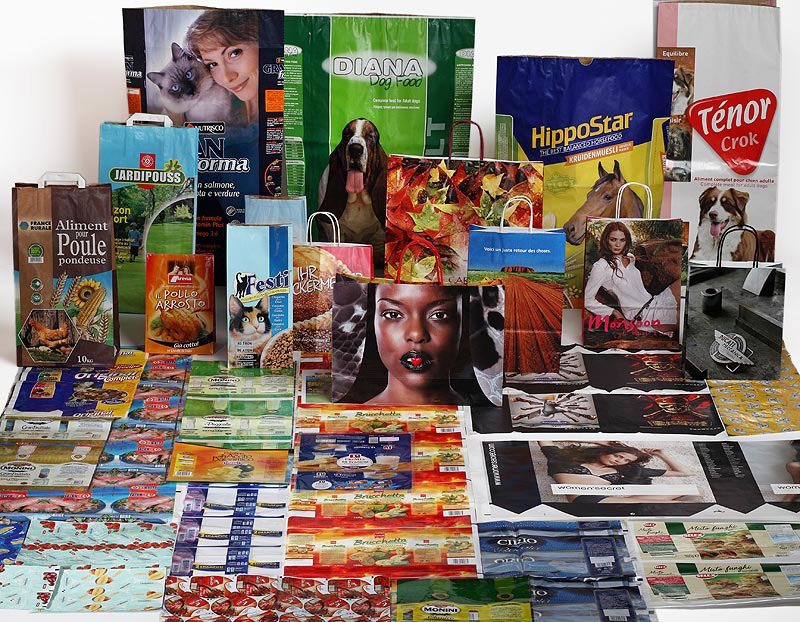
Flexible packaging is employed to contain many types of products and is especially designed for the food industry. Frozen food, cakes and pastries, baked products, coffee, snacks, pasta and rice: all of these are suitable for flexible packaging which keeps them preserved for a longer time. For example, flexible materials for frozen food have to be resistant to very low temperatures (up to -35°). Also, they have to be waterproof and retain water. But in some other applications the most important thing is not resistance but flexibility: biscuits and snacks, for example, are mainly packed in bags that can be easily opened and resealed.
Flexible packaging as a marketing strategy
In addition to the functional features of flexible packaging, visual appeal has become increasingly important with consumer choices also being based on product appeal, especially in the food market.
Packaging with realistic and sharp images thtat well represent the contents is more attractive and significantly boosts sales. Printing must match high quality standards so that the flexible packaging can be exploited to its full functional and creative potential.
Printing packaging in flexo
Today, flexo is the best technology available to print flexible packaging because it is fast, precise on details and quick-drying.
Flexo uses digital photopolymer or rubber plates that can also print with solventless inks, like water-based inks. The printing forms are inked by a roller called “anilox”, which has a surface engraved with very fine cells for transferring the correct amount of ink to the plate, which then transfers the ink onto the substrate.
Based in the area of Treviso, Nu-Maber is one of Italy’s leading companies specialised in the production of flexo printing forms.